Hiplok D1000
€184

Buying guide
By Kobolt Bikes · ·
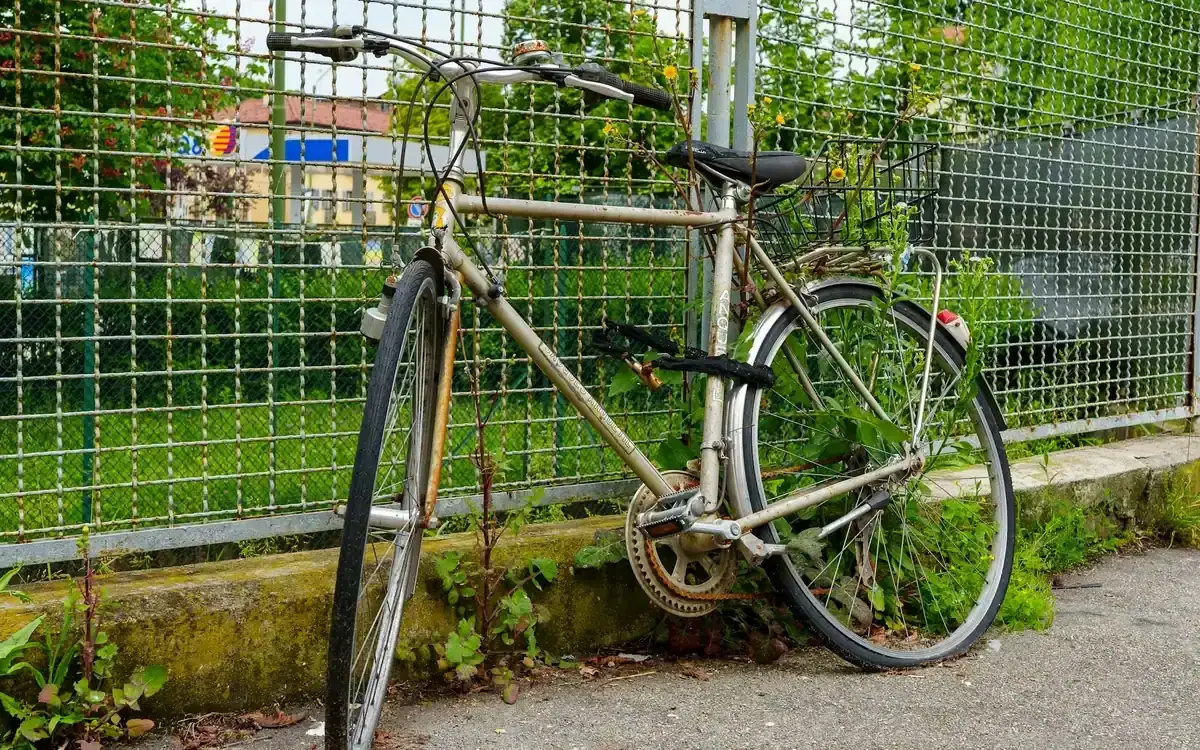
A D bicycle lock is the most common way to secure a bike, but a chain can be the better answer for a heavy e-bike or an awkward parking spot. This guide explains how the two compare, what security ratings do and do not tell you, how weight and size change the choice and how three locks we stock compare: the Hiplok D1000 at €184, the Kryptonite New York Fahgettaboudit chain at €129 and the Kryptonite Evolution Series 4 chain at €98. Prices come from our catalogue and specifications from our product pages, and we say plainly that no lock makes theft impossible.
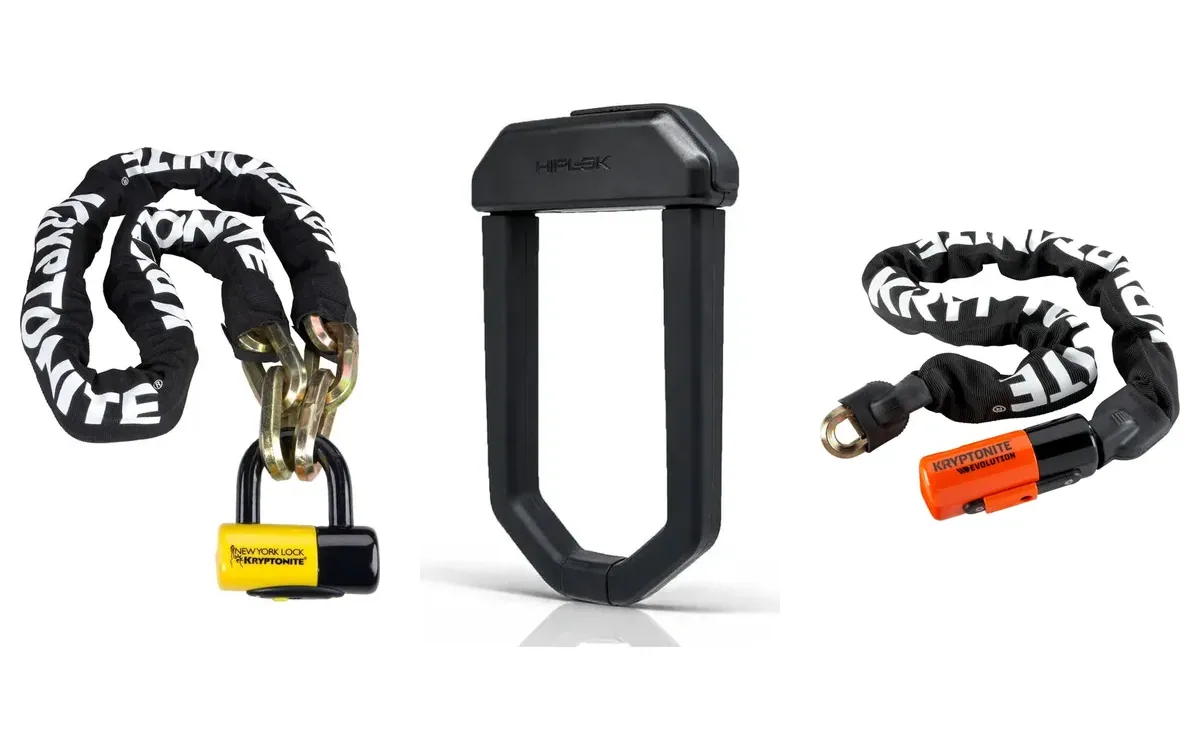
We list two chains and one D-lock. Prices are our catalogue prices in euro including VAT; ratings and sizes are on the product pages. A dash means the page publishes no figure and we did not guess one.
| Model | Price | Security rating (as published) | Type and size | Weight |
|---|---|---|---|---|
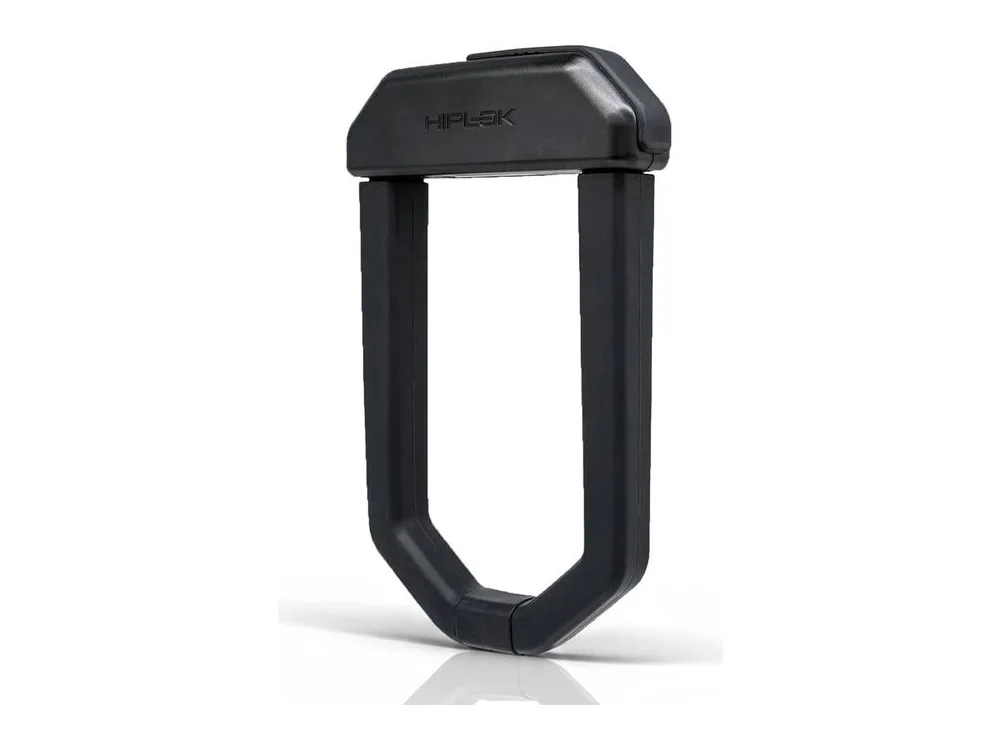
| Hiplok D1000 | €184 | Sold Secure Diamond | D-lock, 32 mm shackle, 230 × 155 × 40 mm | 1.9 kg |
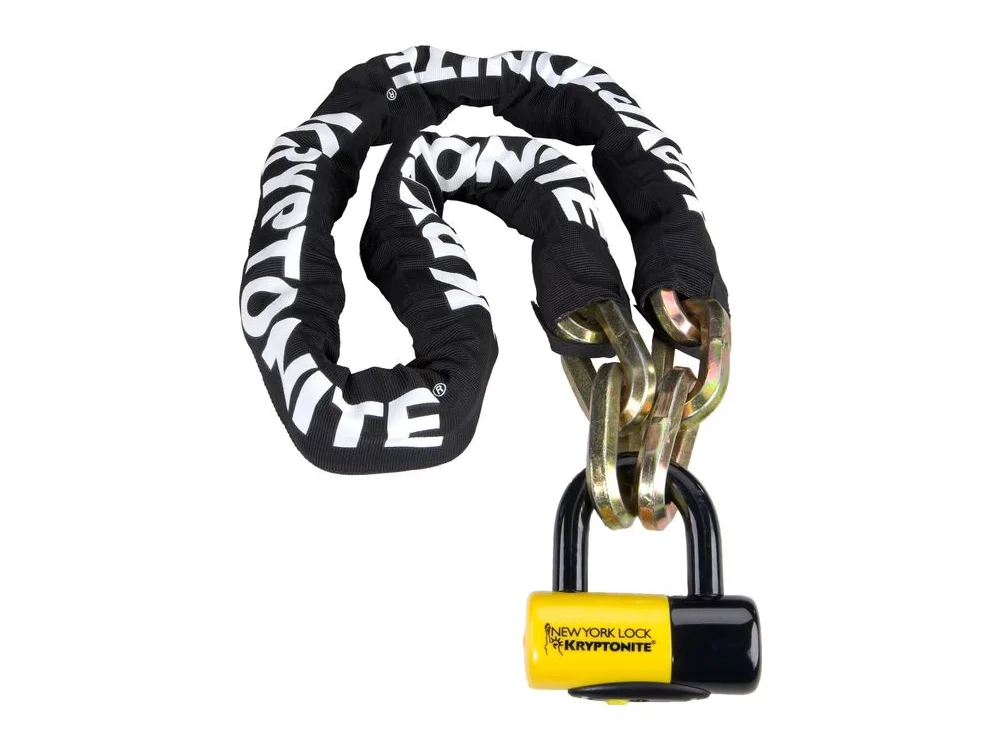
| Kryptonite New York Fahgettaboudit Chain 1415 | €129 | Sold Secure Diamond | Chain, 14 mm steel, 150 cm | 6.92 kg |
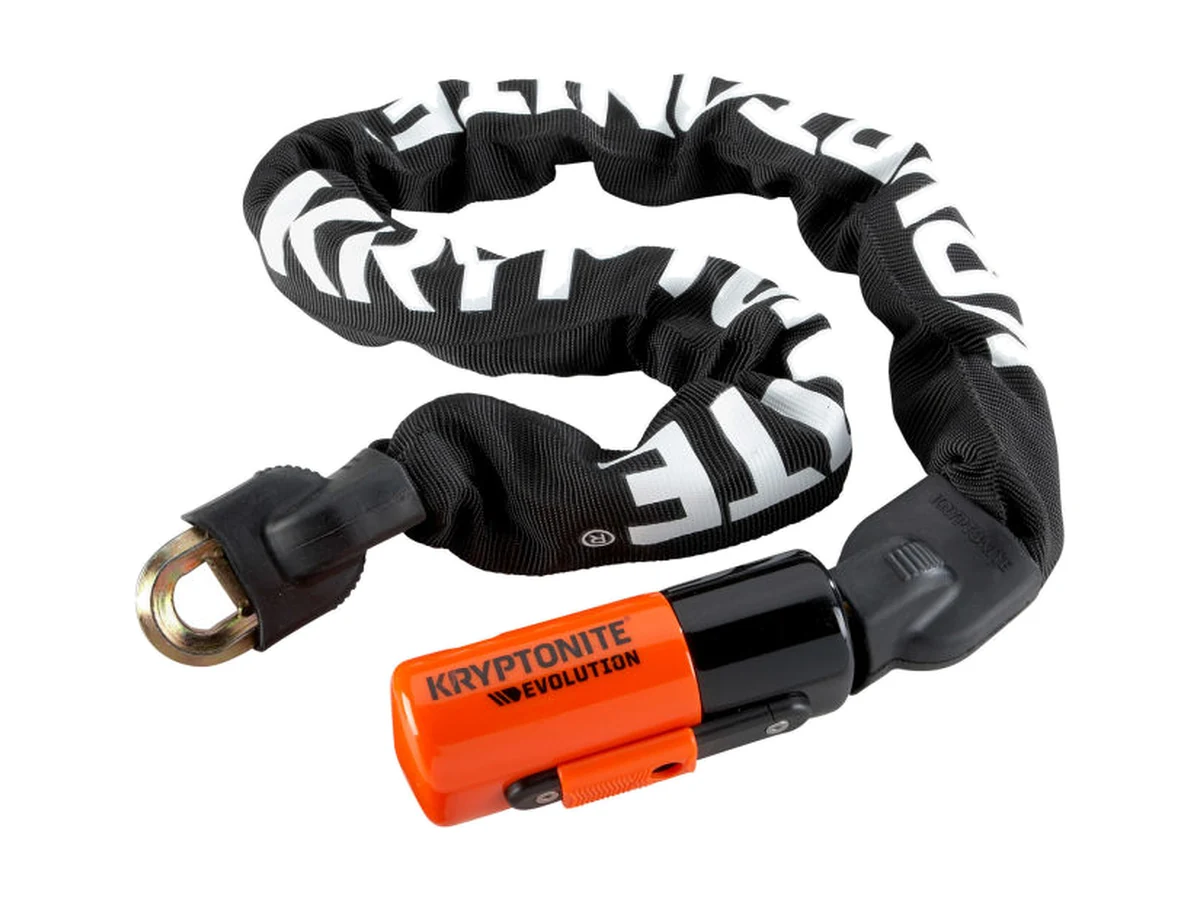
| Kryptonite Evolution Series 4 Integrated Chain | €98 | – | Integrated chain, 10 mm hexagonal links (3T manganese steel) | – |
The spread is large. The Hiplok D1000 weighs 1.9 kg, while the Kryptonite New York chain weighs 6.92 kg for 150 cm of 14 mm steel. The Evolution Series 4 is an integrated chain with 10 mm hexagonal links in 3T manganese steel, and our page does not list a rating or a weight for it, so ask us before relying on it for a high-value bike.
Retailer and maker guides broadly agree. A D-lock is compact and very strong for its weight, which suits a single bike in a high-risk area. A chain is more flexible: it reaches around awkward posts and can secure a bike and a wheel or two bikes together, but it is heavier and usually costs more as quality rises. Many guides suggest combining two locks, for example a D-lock through the frame and rear wheel and a chain for the front wheel.
Think about how you park. If you lock to a standard stand with a clear space, a D-lock is light and quick. If you lock to railings, trees or thick posts, a chain is more forgiving. If you carry the lock every day, weight matters: 1.9 kg is carryable, and almost 7 kg is a lot to carry on a commute and is better as a lock you leave at a regular parking place.
You will also see cable locks, folding locks and padlocks. They are lighter and cheaper, and they are fine for a quick stop or as a second lock, but they are generally easier to cut than a thick D-lock or chain, so they are a weak choice as the only lock on a valuable bike. A small padlock can also secure a wheel quick-release or a trailer, which makes a useful extra layer. Choose the heaviest lock you will actually carry and use, because the best lock is the one that is on the bike every time you leave it.
Our three locks show a rating or material on their pages. The Hiplok D1000 and the Kryptonite New York Fahgettaboudit chain are both listed as Sold Secure Diamond, with a 32 mm shackle on the D1000 and 14 mm steel links on the chain. According to retailer guides, Sold Secure is an independent UK testing body with Bronze, Silver, Gold and Diamond tiers, and ratings are model-specific, so check the current register before you buy. Brand rating scales, such as a 1 to 15 number, are not comparable with Sold Secure.
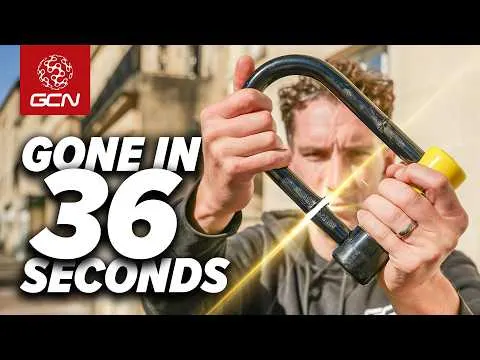
Ratings are a useful filter, not a guarantee. A lock that resists a tool for a few minutes slows a thief, but a determined thief with a battery grinder may still succeed, which a well-known independent test video shows. Insurers often require a minimum rating, so check your policy before you spend. The maker Hiplok states a 10-year warranty on eligible locks registered within 30 days of purchase, and markets its 1000 Series as resistant to angle grinder attacks, which is a claim from the maker, not something we have tested.
Compare locks on the same basis: type, thickness, length or shackle size, weight and rating. A shackle that is too small will not go around the frame and a fixed object, and a chain that is too short limits where you can park. Fit matters as much as strength: a lock that cannot reach the post is no use.
Park where people pass and where there is light and a camera, and lock at home too. Remove accessories such as lights and a phone when you leave the bike; see our bike phone mount guide for quick-release options.
E-bikes are heavier and more valuable than most bikes, which makes them a target. Choose a stronger lock, use two locks where you can, and take the battery with you if it can be removed. Many e-bike batteries are removable; check the manual. A heavy chain suits an e-bike you park at the same place each day.
An electric dirt bike such as a Sur-Ron Light Bee X is a different case: it is usually stored in a garage or van, and a ground anchor and chain are common ways to secure it, in addition to insurance. A bike lock is not an immobiliser, and it does not make an off-road bike road-legal. Our electric dirt bike buying guide covers the legal side.
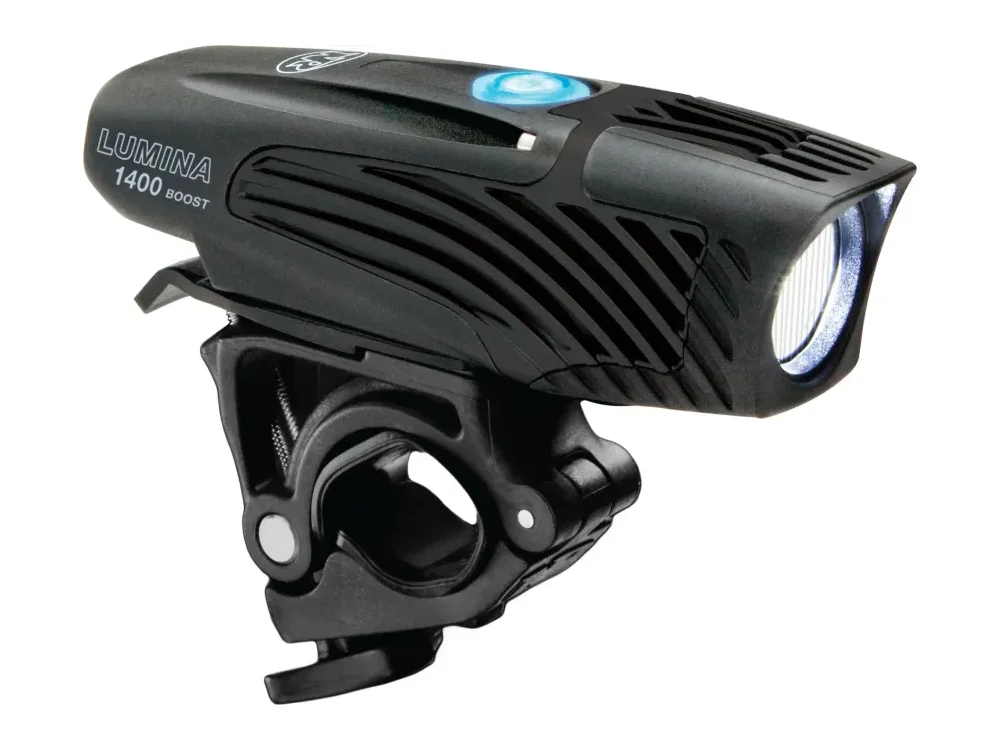
For night rides and commuting we also list the NiteRider Lumina 1200 light (€101), and our bike lights guide explains the rules.
At €98, €129 and €184 the three locks cover a wide range. The price buys material, thickness, rating and weight, and a better lock is worth a fraction of the bike it protects. One guide suggests spending roughly 10% of the bike's value on security, which is a rough rule, not a law. For a high-value e-bike, buy the best lock you can carry and use it every time.
We ship from Germany with free delivery in Denmark. Outside Denmark a flat €69 shipping fee applies below €3,000, and free EU land shipping applies above that. Orders are processed in 1 to 3 business days, you have a 14-day right of withdrawal, and the minimum order is €350. Ask on the contact page about stock and delivery.
For an independent angle-grinder test, watch the video above. The maker's page is Hiplok locks. See also our riding gear and accessories.
It depends on your bike and where you park. The Hiplok D1000 costs €184, is listed as Sold Secure Diamond, has a 32 mm shackle and weighs 1.9 kg on our page. For awkward parking spots a chain such as the Kryptonite New York at €129 may suit better.
A D-lock is compact and strong for its weight, which suits a single bike in a high-risk spot. A chain is more flexible and can secure more parts or two bikes, but it is heavier. Many guides suggest combining both on a high-value bike.
According to retailer guides, Sold Secure is an independent UK testing body with Bronze, Silver, Gold and Diamond tiers, and Diamond is the top tier. Ratings are model-specific and can change, so check the current register, and check whether your insurer requires a minimum.
On our pages the Hiplok D1000 weighs 1.9 kg and the Kryptonite New York Fahgettaboudit chain weighs 6.92 kg for 150 cm of 14 mm steel. The Evolution Series 4 chain page does not list a weight, so ask us before ordering.
Yes, usually. E-bikes are heavier and more valuable, so choose a high-rated lock, use two locks where you can, and take the removable battery with you. A lock does not make an off-road electric dirt bike road-legal.
The Kryptonite Evolution Series 4 costs €98, the Kryptonite New York chain €129 and the Hiplok D1000 €184 including VAT in our catalogue. Outside Denmark a flat €69 shipping fee applies below €3,000, and free EU land shipping applies above that.
Ready to choose? Browse riding gear and accessories, or ask us which lock suits your bike, your parking and your insurer.
Topics: d bicycle locklock for bikebiking locksmall bike lockbike bike lockchain locks for bicyclesbike padlockwheel lock for bicycleuk bike locksbike locks with combinationbike locks